Climate-resilient production
Develop irrigated and rainfed production areas, improve water control and support double-cropping where feasible.
 Government of Sierra Leone • Ministry of Agriculture and Food Security
SLERAZ is a public investment in Sierra Leone's rice value chain. It combines irrigation, land development, mechanisation, aggregation, processing, logistics, skills and private-sector participation in one programme.
These are planned targets in the project technical annex. They are not presented as completed results.
Increasing rice production is only one part of the project. SLERAZ also addresses how paddy is moved, dried, stored, milled, financed and connected to buyers.
This website focuses on project objectives, target infrastructure, beneficiaries, financing, safeguards and participation opportunities. Detailed procurement schedules, staff compensation, contractor-specific material and personal resettlement information are not published here.
Develop irrigated and rainfed production areas, improve water control and support double-cropping where feasible.
Improve access to certified seed, fertiliser, machinery services, extension support and farmer organisation.
Support drying, cleaning, storage, farm access tracks, jetties and links between production zones and processors.
Establish integrated processing hubs to improve milling quality, consistency, packaging and value addition.
Connect farmers, aggregators, processors, off-takers, finance providers and private operators.
The design connects four stages that are often handled separately.
Each stage is intended to reduce a specific bottleneck and make the next stage more commercially viable.
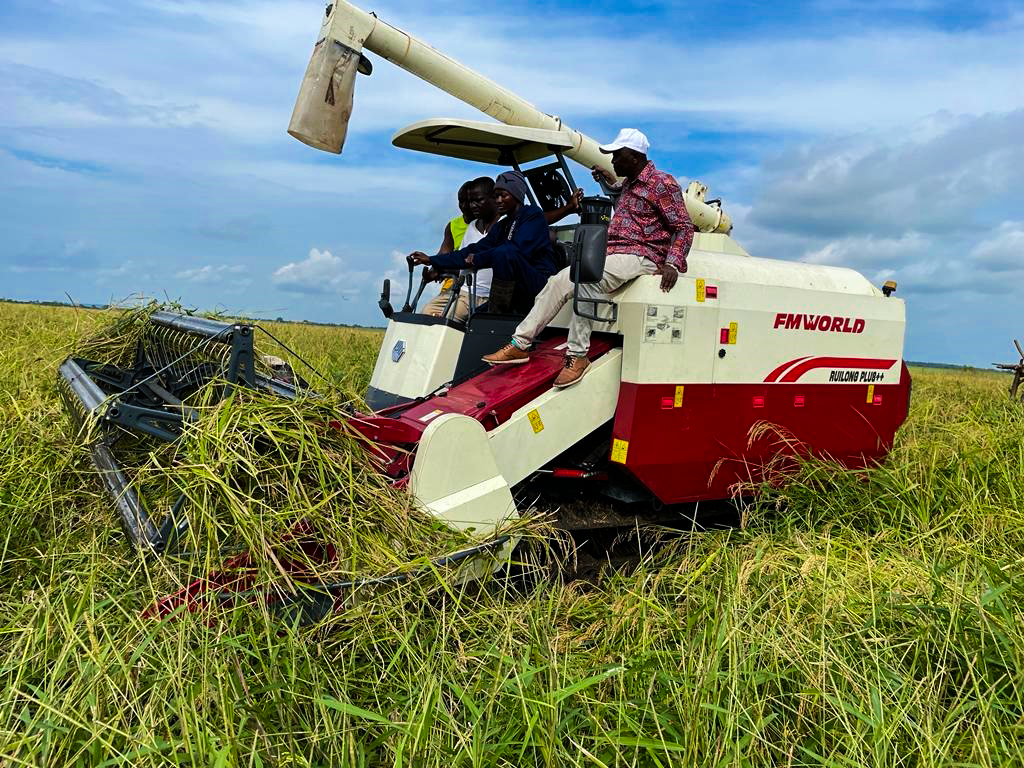
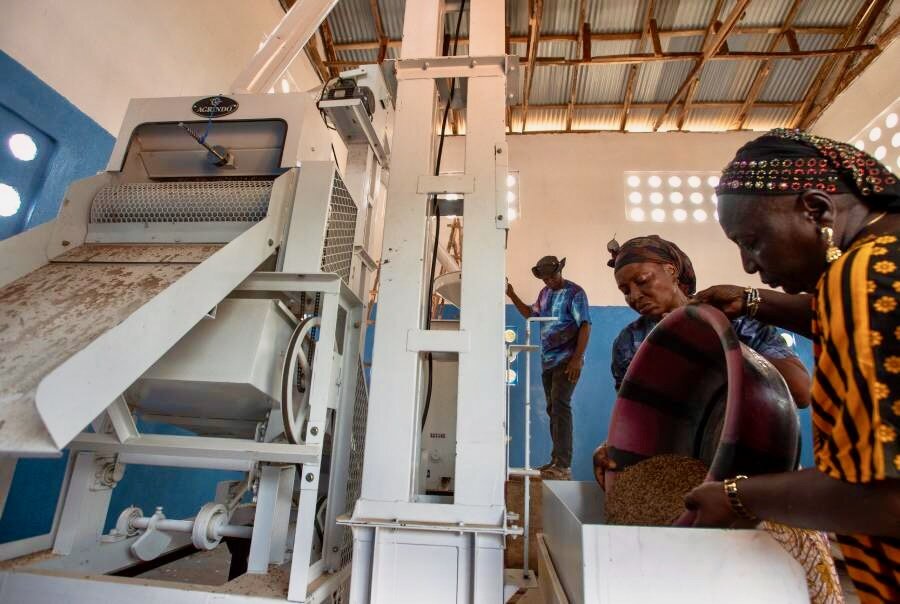
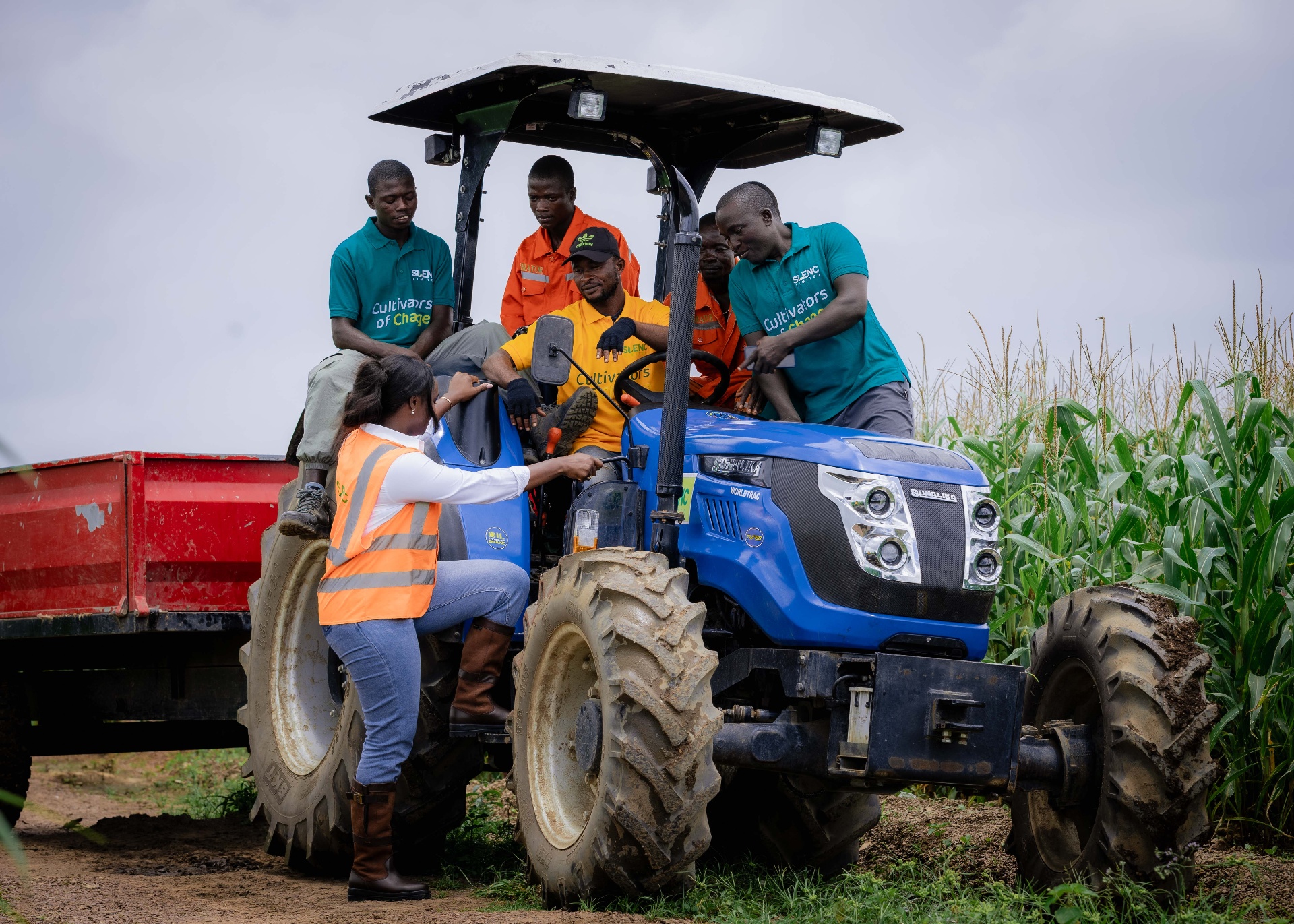
The photographs below are from Sierra Leone. They show the types of activities SLERAZ is designed to strengthen: mechanised production, milling and farmer participation. They are sector-context images and are not presented as completed SLERAZ works.

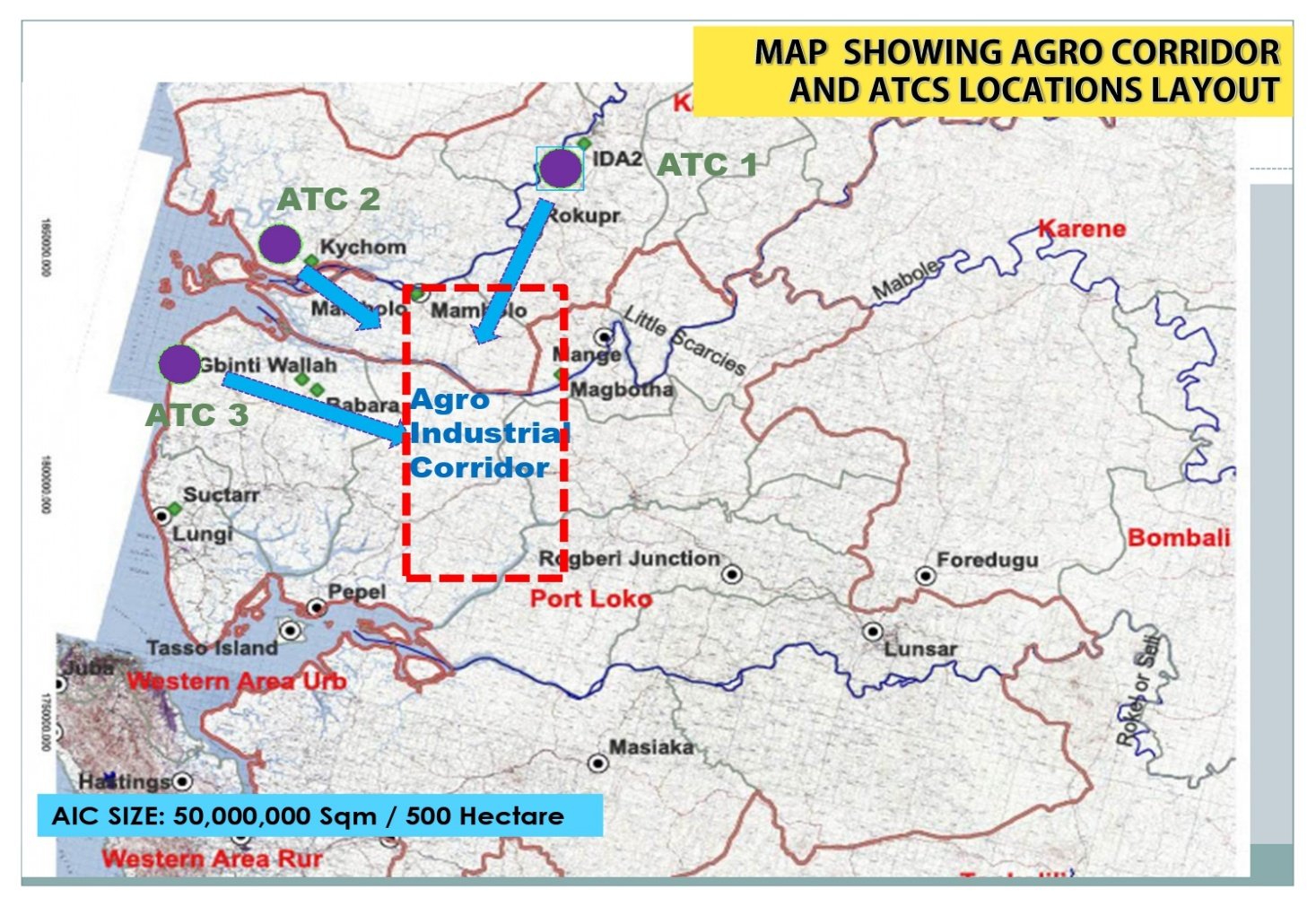
The project targets major rice-growing areas in the north-west of Sierra Leone. Production, aggregation, transport and processing investments are intended to work as a connected corridor.
Planned production, aggregation and agro-processing investments include activity around Kychum and Mambolo, with links to surrounding farming communities.
Planned rice production and processing infrastructure is designed to connect inland and riverine production areas to aggregation and market channels.
The map is taken from the project technical annex and is intended as a public orientation graphic.
The project model assumes that better water management, improved seed, mechanisation, agronomic practices and capacity support can lift average rice yields toward 4 tonnes per hectare in supported production systems.
Yield figures are modelling assumptions and targets, not guaranteed outcomes.
This graphic shows the relative emphasis of the project design, not measured completion percentages.
The current technical annex summarises an overall programme envelope of approximately US$74.79 million. Financing is split between the OPEC Fund loan and African Development Fund grant resources.
Government of Sierra Leone African Development Fund / Bank Group
 OPEC Fund for International Development
Financing figures are taken from the project's summarised cost table. Detailed procurement budgets are not reproduced on this public site.
No. It covers production, water management, seed and inputs, mechanisation, aggregation, storage, transport, processing, market development, private-sector participation, skills and safeguards.
The project analysis identifies roughly 35,000 smallholder farmers and SME operators as the primary target population, with specific attention to women and young people.
Yes. The project design includes private-sector roles in commercial production, mechanisation services, seed and inputs, processing, finance, aggregation, off-take and operation of agro-industrial infrastructure.
Environmental and social instruments were prepared and publicly disclosed, including environmental and social impact assessments, a resettlement action plan, pest management plan, stakeholder engagement plan and grievance redress mechanism.
Email info@sleraz.com or call +232 78 649 471. The project team can direct enquiries to the appropriate technical or investment channel.
Use the project contact details for general information, private-sector interest, partnership enquiries and public-information requests.